When you commit to clearing a tattoo, the question that shapes your calendar isn’t only “how many sessions,” but “how long does my skin need between them?” Good planning treats recovery as part of the result. The interval after tattoo removal is when your immune system carries away pigment fragments, redness settles, and texture returns to baseline. Rush that window, and progress stalls; respect it, and each visit does more with less drama. This guide explains what recovery looks like week by week, what changes by body site and skin type, and how to tell objectively when you are ready for the next pass.
The recovery timeline at a glance
Every skin heals on its own clock, but most people follow a recognisable arc after tattoo removal: Hours 0-24. Expect warmth, a pink flush, and sometimes pinpoint swelling or light “frosting.” Cooling in short intervals and a bland moisturiser keep things comfortable. Fitness that traps heat under tight kit can wait until tomorrow. Days 1-3. Pinkness fades; the area may feel slightly tight. Tiny micro crusts or “peppering” lift naturally in the shower no picking. For many, the skin already looks calm enough for desk work and low-sweat routines. Days 4-10. The surface looks quiet, even though deeper clean up continues invisibly. This is when you might start to notice early fade along fine lines. Sun protection matters most here: UV exposure is the quickest route to patchy outcomes after tattoo removal. Weeks 2-3. The first clear fading becomes obvious in fixed light photos. Any tenderness is usually gone, even on slower healing sites like ankles or hands. The immune system is still clearing fragments; the laser is not the whole job. Weeks 6-10. For most body areas, this is the sweet spot to reassess and (if indicated) treat again. Distal sites or higher melanin skin sometimes benefit from the longer end of that range. Well timed spacing keeps tattoo removal efficient without stacking irritation.
Why spacing is part of the treatment not a delay
It feels counterintuitive that more time can mean faster results. Yet clearance happens between visits. Laser pulses shatter pigment; macrophages then transport debris away along lymphatics. If you stack sessions too tightly, you accumulate inflammation without giving biology time to finish the last job. Smart spacing keeps tattoo removal moving forward while protecting tone and texture.
See also: The Impact of Smart Wearables on Healthcare
What changes by body site
Circulation drives speed. Shoulders, upper back, and upper arms well perfused areas tend to quiet quickly and show earlier fade. Ankles, wrists, hands, and feet clear more slowly and appreciate longer intervals. Ribcage and collarbone can feel “snappier” on the day but usually calm within the same 48 hour window. These local differences don’t block progress; they simply shape the timetable for tattoo removal so you are healing, not hurrying.
Skin tone and recovery windows
Melanin also absorbs light. Higher melanin skin needs deeper penetrating wavelengths and conservative energy ramps. The upside: when parameters respect biology, the surface stays calmer and post inflammatory pigment shift is far less likely. The trade off is patience often leaning toward the 8-10 week end between tattoo removal sessions. Lighter complexions can usually sit closer to 6-8 weeks, provided the photos show genuine fade and the surface looks settled.
Colour, chemistry, and the “plateau effect”
Black and navy respond predictably to 1064 nm; bright reds and oranges need a different band; greens and teals often benefit from a third wavelength. Multicolour pieces sometimes fade in layers: one hue lets go, then another appears to “plateau” until the first is out of the way. That’s normal. It’s also a reason we avoid chasing every colour too soon. Staging wavelengths one clear goal per visit helps tattoo removal make steady, visible progress without over treating tissue that’s still remodelling.
Comfort strategies that shorten downtime
Cooling is king contact tips or high flow cold air keep the epidermis quiet while energy targets pigment below. For small, sensitive sites, a prescribed topical anaesthetic under occlusion can take the edge off without distorting the skin map. Short, methodical passes beat long “hero” runs: you recover faster, and the result looks cleaner. Simple positioning helps too; a good skin stretch lowers nerve chatter and makes each pass more efficient during tattoo removal.
Aftercare that protects the gains
Recovery is mostly routine, not magic. Keep the area cool in short intervals the first evening. Cleanse with lukewarm water and a very gentle, fragrance free wash; pat dry no rubbing. Moisturise with a bland cream or light occlusive. Avoid saunas, hot yoga, and pools for 24-48 hours. Above all, treat UV as the deal breaker: broad spectrum SPF 50 and real shade on exposed skin for the entire course and several weeks after each tattoo removal visit.
What “fast recovery” really means
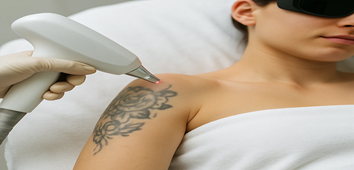
It doesn’t mean sprinting back for the earliest calendar slot. It means minimal disruption after each appointment, reliable comfort within a day or two, and a course that reaches the goal in the fewest necessary visits. Clients are often surprised that the later sessions feel easier: as density drops, heat dissipates faster and the surface settles sooner. That’s the payoff of spacing tattoo removal with intention.
Why choose NDN.LASER for the long game
U deserve more than a machine demo. We match wavelength and pulse domain to your ink and skin, document parameters under fixed light, and pace sessions by evidence photos, not guesswork. On higher melanin skin, we prioritise deeper wavelengths and longer pulses; on multicolour art, we stage hues in sensible order. The through line never changes: safety first, outcome second, speed third. In practice, that order produces cleaner finishes and calmer skin with tattoo removal.
Bottom line
Recovery is not the gap between “real” treatments; it is half the work. When you protect the barrier, respect biology, and schedule by proof instead of impatience, tattoo removal becomes predictable: Short bursts in clinic, quiet skin at home, visible fading at 2-3 weeks, and well timed returns at 6-10. Plan it that way, and the finish looks good in photos and better up close.
More information about our services can be found directly at NDN.LASER